Bedding · Pillow Materials
Why Wool Pillows Feel Different: Loft, Moisture, and Care
A pillow is a small landscape that the head returns to night after night. Wool changes that landscape: resilient rather than weightless, gently cushioning rather than deeply yielding, and notably good at managing the damp, warm microclimate that gathers around a sleeper. Whether this makes it a welcome alternative to down or foam depends on the sleeper, the pillow’s construction, and an often-overlooked detail: how much care the fill can tolerate.
There is a particular disappointment in a pillow that promises softness and then behaves like a small, stubborn hill. There is another in one that feels cloudlike in the store but collapses before morning, leaving the neck to negotiate with the mattress unaided. Choosing a pillow is partly a matter of support, but also of texture, temperature, upkeep, and the peculiar intimacy of sleeping with one’s face pressed into a household object for several hours.
Wool pillows occupy their own corner of this domestic geography. Their fibers have a spring and resilience that can produce a steady, gently cushioned surface. They are not simply woolly versions of down pillows, nor do they behave like a slab of foam. Their feel comes from how the fibers are prepared and arranged, how much fill is used, whether the pillow can be adjusted, and how its cover and seams hold the contents in place.
Wool’s moisture-handling reputation is another part of the appeal. The fiber can take up some water vapor without feeling immediately wet, while the spaces among fibers allow air to move. That does not turn a pillow into a cooling device, or guarantee a cool night. But it helps explain why some sleepers describe wool as less clammy than dense, poorly ventilated bedding. The sensible question is not whether wool is universally better. It is what kind of comfort it offers, and whether that comfort fits the way you sleep.
The feel of wool: spring, not sink
Wool fibers are naturally crimped. In a pillow, that waviness helps create small pockets of air and gives the fill a certain liveliness under pressure. When you rest your head, the material compresses; when the pressure shifts, it can recover. The result is often described as resilient, buoyant, or gently firm. These are impressions, not standardized measures, and two pillows labeled “wool” may feel quite different.
One reason is the form of the fill. Some pillows use wool batting arranged in layers; others use small tufts or bolus, which are loose, rounded clusters of wool. A layered pillow can feel more uniform, with a somewhat settled surface. A bolus-filled design may feel more pliable, depending on its density and construction. The stitching, interior compartments, and thickness of the fill all contribute to the experience. “Wool” identifies a material, not a single, dependable sensation.
Compared with down, wool typically offers less of the dramatic, airy collapse that many people associate with a plush featherbed. Down clusters can compress readily and feel light and enveloping. Wool tends to answer pressure with more pushback. It may suit someone who likes a surface that cushions without disappearing, while a person seeking a very soft, low-resistance pillow might prefer a different fill or a softer wool construction.
Foam has a different vocabulary. Depending on its type and shape, foam can contour closely, respond slowly, or keep a more stable outline. Wool generally feels less like a molded cradle and more like a responsive cushion. It may shift and settle, particularly if its fill is loose, but it does not typically create the same close-fitting contour associated with memory foam. Comparing materials is useful; expecting them to imitate one another is less so.
Descriptions such as “medium” and “firm” are only starting points. Manufacturers may use different standards, and the sensation depends on the sleeper’s weight, shoulder width, sleeping position, mattress, and preferred loft. A pillow that seems firm in the hand can compress substantially beneath a head. If possible, check whether the maker explains the fill amount, construction, or intended profile rather than relying on a firmness adjective alone.
Loft is a relationship, not a number
Loft describes a pillow’s height, but its useful height is the height that remains after the head has settled into it. The distinction matters. An uncompressed pillow can look impressively lofty on a bed and still compress into a flatter support once occupied. Conversely, a pillow that looks modest may hold its shape and create a higher working profile.
The goal is not to keep the head as high as possible. It is to find an elevation that feels comfortable and allows the head and neck to rest in a relatively neutral position. A side sleeper may need more height to fill the space between the ear and mattress, while a back sleeper often prefers a lower profile. Stomach sleepers commonly need a much thinner pillow, or may find that a pillow is unnecessary. These are broad patterns, not rules issued by the pillow police; body shape, mattress firmness, and personal comfort all matter.
Wool’s resilience can be helpful to people who dislike a pillow that quickly turns flat, but resilience should not be confused with permanent loft. Fibers can compress with repeated use, and their behavior varies by fill type and density. Some wool pillows are intended to be fluffed or shaken; others have layered interiors that should not be pulled apart. A product’s initial shape is not a complete forecast of how it will feel several months later.
Think of pillow loft as a relationship between the filling, the sleeper, and the bed. A thick mattress that lets the shoulder sink more deeply may change the height a side sleeper needs. A broad shoulder may need more space filled than a narrow one. A pillow that feels comfortable while sitting upright may not work in the same way once the body is horizontal. If testing a pillow, try it in your usual sleeping position and allow a little time for the fill to settle.
Adjustability: a useful feature, with limits
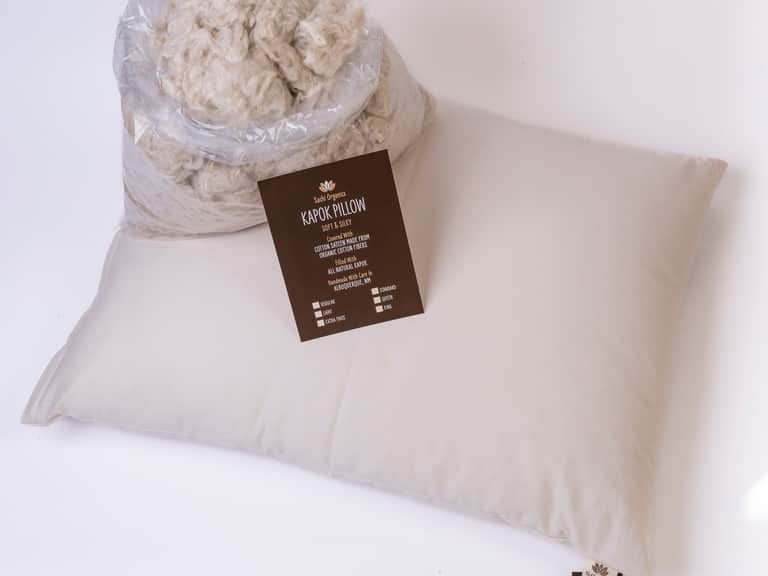
Some pillows allow the sleeper to add or remove fill. This can make an unfamiliar material easier to live with: too much height can be reduced, while a pillow that feels sparse may be improved if extra fill is available. Adjustable designs are particularly appealing when the right loft is uncertain or when the sleeper’s preferences change between positions.
But an adjustable pillow is not automatically an easy pillow. Opening a case can release a surprising quantity of loose fiber, and removing too much at once can produce a fill level that is difficult to restore. If the pillow comes with instructions, follow them; if it includes a separate storage bag of fill, keep it somewhere clean and dry. Make small changes, close the pillow, and test the result before making another adjustment. This is less thrilling than a dramatic overhaul, but it is usually more effective.
Adjustability also depends on construction. A pillow with a zipper may let you alter the quantity of loose fill, while a pillow made from stitched layers may not be designed for modification at all. Some wool pillows have a washable outer cover but a fill insert that should not be washed. Others may be spot-cleaned only. A zipper is a feature, not a promise that every part of the pillow is removable or washable.
Before buying, consider whether you are comfortable handling fill and storing the material you remove. For some people, this is the sort of small domestic project that feels pleasantly practical. For others, it is a container of wool on a bedroom floor, accompanied by a growing suspicion that the pillow had been fine yesterday. Either response is reasonable. The best adjustable pillow is one whose adjustment process you are willing to use.
Moisture management without magic
Sleep creates a warm, enclosed environment beneath the covers. The head and face release heat and moisture; bedding can trap some of both. Wool’s fiber structure can absorb water vapor and release it as surrounding conditions change. Air spaces among the fibers may also support ventilation. Together, these properties can contribute to a sleep surface that feels less damp or stuffy to some people.
That is not the same as saying wool keeps every sleeper cool. Temperature comfort is shaped by the whole bed: room conditions, sheets, mattress, blankets, sleepwear, and individual physiology. A warm room can overwhelm the advantages of a breathable pillow. A heavy cover or a tightly woven protector may alter how air moves around the fill. Someone who tends to sleep hot may appreciate wool’s handling of moisture and airflow, but should treat it as one consideration in a broader bedding setup.
Nor is moisture absorption a substitute for washing. Wool may manage ordinary humidity, but sweat, skin oils, hair products, and household dust still accumulate in bedding. A washable pillowcase and a protective cover can help keep the pillow itself cleaner. Launder these according to their labels, and allow them to dry fully before putting them back on the bed.
Claims about “hypoallergenic” materials deserve careful reading. A fiber’s natural properties do not establish that a particular person will never react to it, and a pillow can collect allergens regardless of its fill. A tightly woven, washable protector may be useful for people managing dust-mite allergies, but it is not a treatment. Anyone with significant allergy symptoms should follow advice from a qualified healthcare professional rather than relying on a product description.
Care: follow the pillow, not the general rule
Wool pillows are not all cared for in the same way. Some have removable covers that can be washed while their interiors are spot-cleaned only. Some are described as machine washable; others should never be immersed. The presence of wool alone does not tell you what the finished pillow can withstand. Construction, backing fabric, stitching, and any treatments or blends matter too.
The maker’s care label is therefore more important than a familiar household shortcut. If the instructions say spot clean, do not assume a gentle machine cycle is close enough. If they specify a removable, washable cover, separate it from the insert before laundering. If machine washing is permitted, observe the stated temperature, cycle, and drying method. Avoid improvising with heat or vigorous agitation: wool fibers can shrink, felt, or change texture under unsuitable conditions, while a damp interior can take time to dry thoroughly.
For routine care, a washable pillowcase and protector are the uncomplicated first line of defense. Airing the pillow in a well-ventilated space can help refresh it between more substantial cleaning, provided the maker’s guidance does not advise otherwise. Fluffing or gently redistributing the fill may be appropriate for some designs, but not every pillow should be beaten, bent, or shaken with enthusiasm. Read the instructions before turning maintenance into a sport.
If a pillow gets wet, drying deserves patience. A cover that feels dry does not prove that the interior is dry. Moisture left inside can create an unpleasant odor and compromise the fill. Use only the drying method permitted by the manufacturer, and make sure the pillow is thoroughly dry before covering it again. If liquid has soaked deeply into a pillow whose insert cannot be washed, consult the care guidance rather than trying a more aggressive treatment on instinct.
It can be useful to check care instructions before purchase, not after the first spill. A pillow requiring professional attention or careful spot-cleaning may be perfectly manageable in a calm household. In a home with young children, pets, frequent travel, or a tendency for breakfast to arrive in bed, ease of cleaning may deserve more weight. Comfort is important; so is knowing what happens when the coffee cup loses its nerve.
How to decide whether wool belongs on your bed
A wool pillow may be worth exploring if you like resilient cushioning, want a fill that does not feel as foam-like or as freely compressible as down, or are curious about natural fibers and their moisture behavior. It may be a less natural fit if you strongly prefer a very soft, sinking sensation, want the simplest possible machine-wash routine, or need a precise contour that a particular pillow shape does not provide.
Use the following questions as a practical first pass:
- What is your usual sleep position? Consider the height you need to keep your head comfortable, while remembering that position is only one part of the fit.
- How does the pillow feel under pressure? Look for information about fill form, density, and construction—not just the word “wool.”
- Can the loft be adjusted? If so, find out how fill is removed or added and whether extra fill is included or available.
- What can actually be washed? Distinguish between a removable cover, an insert, and the complete pillow.
- How do you respond to warmth and dampness? Wool may suit people seeking a more breathable-feeling sleep surface, but it cannot control every factor in the room.
- What level of maintenance feels realistic? A care routine that fits your life is more useful than an ideal routine you will avoid.
When comparing pillows, record what you notice rather than trying to remember a handful of adjectives. Does the pillow compress gradually or immediately? Does it hold enough height after several minutes? Can you move your head without feeling trapped? Does the surface feel comfortable against your face? A short trial, where available, can reveal more than the material label alone.
Keep expectations measured. A pillow is not a cure for insomnia, persistent neck pain, or an underlying medical condition. It can affect comfort and support, and those things matter, but sleep is also influenced by routine, environment, health, and stress. If discomfort continues or sleep problems are affecting daily life, a healthcare professional can help identify whether something beyond bedding is involved.
A small object, many variables
The difference between wool, down, and foam is not a contest with a single winner. Down offers a soft, compressible feel; foam can provide closer contouring and a more stable shape; wool often brings springy support and a distinct approach to airflow and moisture. Within each category, design can alter the experience as much as the material itself.
That is why the useful questions are specific: How high does the pillow remain beneath your head? Does it yield in a way you enjoy? Can the fill be adjusted? What needs washing, and how? The answers help transform a vague search for “the best pillow” into a decision about a real object, for a real bed, and a particular way of sleeping.
Wool’s appeal is partly tactile and partly practical. Its fibers offer a resilient feel; its structure can support airflow and absorb some moisture vapor; its maintenance, meanwhile, asks for attention to construction and labels. For the right sleeper, that combination can feel quietly satisfying. For another, it may feel too springy, too involved, or simply unlike the pillow they want. The pillow does not take offense. It waits, lightly compressed by the expectations we bring to it.